Jerome Powell on 60 Minutes last night
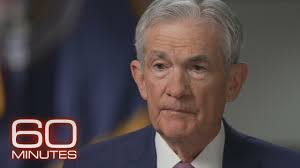
Last night, Jerome Powell was interviewed by Scott Pelley on 60 Minutes (taped on Thursday.) I noticed a few things:
1. At last Wednesday’s FOMC press conference, I was surprised that Powell said the strong economy wasn’t a factor in delaying rate cuts (twice.) In this interview, he corrected that, mentioning the strong economy and strong labor market several times. In one exchange, he said;
Scott Pelley: You’ve avoided a recession. Why not cut the rates now?
Jerome Powell: Well, we have a strong economy. Growth is going on at a solid pace. The labor market is strong: 3.7% unemployment. And inflation is coming down. With the economy strong like that, we feel like we can approach the question of when to begin to reduce interest rates carefully.
2. Powell reaffirmed that the Summary of Economic Projection (SEP) forecasts are not as meaningful as they are perceived. In response to Scott Pelley’s question about if December’s SEP projections (showing that the Fed will cut 3 times this year) are a good forecast,
Scott Pelley: So something around a 4.6% interest rate is likely?
Jerome Powell: I would say it this way. It’s really going to depend on the data. The data will drive these decisions. And we can’t do any better than to look at the data and ask ourselves, “How is this affecting the outlook and the balance of risks?” That’s what we’ll be doing. So, what we actually do will depend on how the economy evolves.
3. In a question about commercial real estate, Powell downplayed the risk calling it ‘manageable’ (as is typical, think Ben Bernanke saying subprime is ‘contained’ in 2007), but did admit that some banks will fail.
“There will be certainly — there will be some banks that have to be closed or merged out of, out of existence because of this. That’ll be smaller banks, I suspect, for the most part. You know, these are losses. It’s a secular change in the use of downtown real estate. And the result will be losses for the owners and for the lenders, but it should be manageable.”
Where Wednesday’s press conference felt dovish, this interview leaned hawkish. It is because economic data is going through a “better than expected” phase, but, upon the next concerning economic reports, the Fed will turn back to dovish quickly. They won’t say it out-loud, but I suspect they know the business cycle is very close to peaking.